

By
Karis Simms
Untreated hearing loss is now the single largest modifiable risk factor for dementia in mid-life. Here's what you need to know, and what you can do about it.
5x Higher dementia risk for people with untreated moderate to severe hearing loss
9% Of all dementia cases are attributed to mid-life hearing loss
1 in 3 Dementia cases could be prevented by addressing key lifestyle risk factors, including hearing loss
Is There a Link Between Hearing Loss and Dementia?
Yes, and the evidence is now substantial. For a long time, age-related hearing loss was considered a normal, mostly inconvenient part of getting older. We now know it is anything but trivial. Research from the landmark Lancet Commission on Dementia Prevention has identified hearing loss as the single largest modifiable risk factor for dementia in mid-life, responsible for an estimated 9% of all cases worldwide.
The connection is not about getting older at the same time. Hearing loss appears to actively increase the likelihood of cognitive decline, even at mild levels. The earlier and the longer it goes untreated, the greater the risk.
Approximately 32% of adults aged 55 and over experience some degree of hearing loss, yet only a fraction seek treatment. This makes hearing loss a significant and largely overlooked public health issue in the context of dementia prevention.
Key Research Findings
A major review published in The Lancet found that adults with moderate to severe untreated hearing loss are up to five times more likely to develop dementia than those with normal hearing. Mid-life hearing loss also doubles the risk of developing dementia more than any other single lifestyle factor.
How Does Hearing Loss Increase Dementia Risk?
Scientists and audiologists understand that the two conditions are clearly linked, but the exact mechanisms are still being studied. There are several credible theories, and they are not mutually exclusive.
-
Cognitive overload
When the brain struggles to process degraded sound signals, it diverts cognitive resources away from memory and thinking. This constant "effortful listening" may deplete cognitive reserve over time.
-
Brain atrophy (shrinkage)
Brain imaging studies show that people with hearing loss experience faster shrinkage in areas responsible for memory and speech processing, regions strongly associated with Alzheimer's disease.
-
Reduced brain stimulation
Our brains need stimulation to stay healthy. When hearing is impaired, the brain receives less auditory input and may become more vulnerable to neurodegenerative diseases like Alzheimer's.
-
Vascular connection
Some research points to a shared vascular pathway. Restricted blood flow, linked to vascular dementia, can also damage the delicate structures of the inner ear.
-
Social isolation & depression
Hearing loss often leads to withdrawal from conversations, social isolation, and depression, all of which are independently recognised risk factors for dementia.
-
Brain inflammation
Emerging research (Alzheimer's Research UK, 2023) suggests that noise-induced hearing loss may trigger inflammation in the brain that accelerates memory problems and Alzheimer's-related changes.
It is also important to distinguish between two types of hearing loss. Peripheral hearing loss, where the ears struggle to detect sounds, can often be addressed with hearing aids. Central hearing loss, where the brain cannot process what the ears send, cannot be corrected by hearing aids and may itself be an early sign of neurological change.
Who Is Most at Risk?
The Lancet Commission identified nine lifestyle risk factors that together account for around a third of all dementia cases. Hearing loss tops the list in terms of population-level impact. The other key factors are:
-
Untreated hearing loss Lower levels of education Smoking Depression Physical inactivity Social isolation High blood pressure Obesity Type 2 diabetes
-
Adults aged 55 and over are most affected, with hearing loss prevalence rising significantly with age. However, mid-life (roughly ages 40–65) is when addressing hearing loss has the greatest protective effect on long-term brain health. The longer hearing loss goes untreated, the greater the cumulative risk of cognitive impairment.
Did You Know?
Around 12 million people in the UK have some form of hearing loss, yet the majority wait an average of 10 years before seeking help. With approximately 1 million people currently living with dementia in the UK, early action on hearing health has never been more important.
Can Hearing Loss Be Mistaken for Dementia?
Yes, and this is more common than many people realise. The two conditions share a number of overlapping symptoms, which can make diagnosis complex:
Both hearing loss and early dementia can cause difficulty following conversations, appearing confused or unresponsive, struggling to process complex questions, and withdrawing from social situations. A person with untreated hearing loss may seem forgetful or cognitively impaired when they are simply unable to hear what is being said to them.
This overlap makes regular hearing tests crucial, not just for identifying hearing loss, but for ruling it out as a contributing factor in any apparent cognitive changes. If you are worried about a loved one's memory or behaviour, getting their hearing checked is an important first step.
Do Hearing Aids Reduce Dementia Risk?
The evidence here is genuinely encouraging. While research is ongoing, several large-scale studies suggest that treating hearing loss with hearing aids is associated with a slower rate of cognitive decline. By restoring clearer sound, hearing aids reduce the cognitive burden of effortful listening, keep the brain more stimulated, and help people stay socially engaged.
A major clinical trial (the ACHIEVE study) found that hearing intervention significantly slowed cognitive decline in adults at higher risk of dementia. This is one of the most compelling arguments for treating hearing loss early and consistently — not just for quality of life, but as a genuine brain-health strategy.
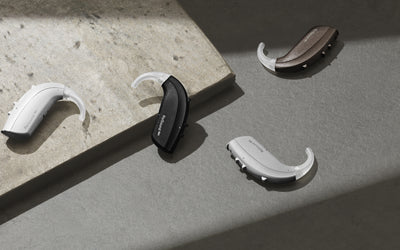
Modern RIC (Receiver-in-Canal) hearing aids are now remarkably discreet and technologically advanced, making it easier than ever to manage hearing loss without lifestyle compromise. For those comparing options, understanding the difference between NHS and private hearing aids is a helpful starting point.
Important Note
Hearing aids are most effective when fitted correctly and worn consistently. A hearing care professional can track your hearing health over time by establishing a baseline during regular check-ups, making early intervention far more effective.
How to Protect Your Hearing and Brain Health
1. Get regular hearing tests
Hearing tests should be part of your routine health check-ups, especially from age 55 onwards. An audiologist will establish a baseline and monitor any changes over time. Early detection is key to early treatment. If you're unsure about your options, read our guide on private vs NHS hearing aids.
2. Treat hearing loss promptly - don't delay
If you've been told you have hearing loss, seek treatment sooner rather than later. Explore our full range of top-rated hearing aids, available online at wholesale prices with expert audiologist support.
3. Stay socially and mentally active
Social isolation is an independent risk factor for dementia. Treating hearing loss helps people stay connected in conversations, reducing isolation and the depression that can accompany it. Maintaining rich social contact is one of the best things you can do for long-term brain health.
4. Exercise regularly
Research shows that older adults who exercise are more likely to retain cognitive function. Physical activity supports healthy blood flow to both the brain and the auditory system.
5. Protect your ears from noise damage
Noise-induced hearing loss is preventable. Avoid prolonged exposure to loud environments, and use hearing protection where necessary. Evidence suggests that loud noise exposure in early adulthood can have lasting effects on brain function later in life.
6. Maintain overall health
Manage blood pressure, blood sugar levels, and weight. Vascular health is directly tied to both hearing and brain function. Addressing these factors holistically gives you the best chance of preserving both.
Frequently Asked Questions
Can hearing loss directly cause dementia?
Research strongly suggests that untreated hearing loss significantly increases the risk of developing dementia, but whether it is a direct cause or an accelerating factor is still being studied. What is clear is that it is the largest modifiable risk factor for dementia in mid-life, and treating it may reduce that risk.
How much does hearing loss increase dementia risk?
People with moderate to severe untreated hearing loss are up to five times more likely to develop dementia than those with normal hearing. Even mild hearing loss measurably increases long-term cognitive risk.
Can hearing aids prevent dementia?
Hearing aids cannot guarantee prevention, but clinical evidence, including the ACHIEVE trial, shows that treating hearing loss can significantly slow cognitive decline, particularly in those at higher dementia risk. Using hearing aids consistently is one of the most actionable steps you can take for brain health.
At what age should I get a hearing test?
Hearing tests are recommended for everyone, but from age 55 onwards they should become a regular part of your health routine. If you notice any changes in your hearing at any age, including difficulty following conversations or needing higher TV volume, it's worth getting checked sooner.
Can hearing loss be mistaken for dementia?
Yes. Both conditions share symptoms such as confusion, social withdrawal, and difficulty processing speech. A hearing test is often an important first step when investigating apparent cognitive changes in an older adult.
What is the best type of hearing aid for someone at risk of dementia?
There is no single "best" device, it depends on your degree of hearing loss, lifestyle, and preferences. Our top hearing aid picks include leading models from Phonak, Signia, and ReSound. Our audiologists can help you choose the right fit.
Shop All Hearing Aids
Shop now
Shop Accessories
Shop now
Speak To Our Audiologists
Contact Us