

By
Karis Simms
Choosing a hearing aid is one of the most personal decisions you can make. Unlike most purchases, there is no single "best" option, the right hearing aid is the one that fits your specific hearing loss, your daily life, and your budget. Get that combination right, and the difference to your quality of life can be transformative. Get it wrong, and you're left with an expensive device that spends most of its time in a drawer.
This guide walks through every factor worth considering, so you can go into the process with confidence, whether you're buying for the first time or looking to upgrade.
3 brands Wholesale Hearing stocks Phonak, Signia, and ReSound, three of the world's leading hearing aid manufacturers
Free Audiologist support is included with every order, we check your audiogram before processing
100% Of our hearing aids are clinically proven, remote-programmable devices, not over-the-counter amplifiers
Start Here: What Makes a Hearing Aid "Right" for You?
There are four things that determine which hearing aid is genuinely right for you. Miss any one of them, and you'll likely end up dissatisfied, even if the device itself is technically excellent.
Those four things are: your hearing loss, your lifestyle, your budget, and your personal preferences. We'll take each one seriously.
1. Your Hearing Loss
This is the most important factor, and yet it's the one most often glossed over in generic "best hearing aids" lists online. Hearing loss is not a single condition, it varies enormously in type, severity, and the specific frequencies affected. The hearing aid that works brilliantly for one person may be completely wrong for another.
Understanding your audiogram
Before choosing a hearing aid, you need a recent hearing test, ideally conducted within the last two years. The result is an audiogram, a graph that plots your hearing threshold across different sound frequencies. It tells your audiologist exactly where your hearing is strong and where it falls short.
At Wholesale Hearing, we ask every customer to submit their audiogram before we process their order. Our audiologists review it to ensure your chosen device is appropriate for your level and type of loss. This step isn't a formality, it's the difference between a hearing aid that genuinely helps and one that simply isn't matched to your needs.
If you don't yet have a recent hearing test, we can help you find a provider locally, or you can access our online hearing test as a starting point.
Degree of hearing loss
Hearing loss is typically classified in degrees:
|
Degree |
Hearing Threshold |
What It Means |
|
Mild |
26-40 dB |
Difficulty with soft speech or background noise |
|
Moderate |
41-60 dB |
Difficulty with normal conversation, especially on the phone |
|
Moderate-to-Severe |
61-80 dB |
Difficulty following speech without a hearing aid |
|
Severe |
81090 dB |
Only loud sounds or speech are audible without amplification |
|
Profound |
91 dB+ |
Very little usable hearing without significant amplification |
Most hearing aids on the market are designed for mild-to-moderate loss. For moderate-to-severe and above, the choice of device and fitting becomes more specialised, which is exactly why that audiologist review matters.
Type of hearing loss
The most common type and the one most hearing aids are designed for is sensorineural hearing loss, caused by damage to the hair cells in the inner ear. This is permanent, but highly manageable with the right hearing aids.
Conductive hearing loss, caused by a blockage or damage in the outer or middle ear, may benefit from medical treatment first. If permanent, hearing aids can still help significantly.
If you're unsure which applies to you, your audiologist will be able to tell you from your hearing test results.
Key Point
A hearing aid is not a one-size-fits-all amplifier. Every device we sell is programmed to your individual audiogram, amplifying the specific frequencies you struggle with, rather than simply making all sounds louder. This is what separates clinically fitted hearing aids from the cheap amplifiers you'll find elsewhere online.
2. Your Lifestyle
Once we know your hearing loss is appropriately covered, the next question is: what does your daily life actually look like? Because a hearing aid that performs brilliantly for a retired person who mainly watches television and has conversations at home may struggle for someone who regularly attends business meetings, restaurants, or sporting events.
Modern hearing aids are sophisticated enough to handle many different listening environments but the technology tier you choose, and the specific features you prioritise, should reflect how and where you spend your time.
Think about where you struggle most
Most people have a clear answer when asked: "Where does your hearing let you down the most?" It might be:
Noisy social environments - restaurants, pubs, family gatherings. Background noise is the nemesis of most people with hearing loss, and the ability to separate speech from competing sound is one of the key differentiators between hearing aid technology tiers. Higher-tier devices like the Phonak Audéo Infinio Sphere i90 or Signia Charge & Go 7 IX feature advanced directional microphones and AI-driven noise reduction that make a real, tangible difference in these environments.
Phone and video calls - phone conversations strip away the visual cues many people with hearing loss unconsciously rely on. Bluetooth-enabled hearing aids that stream calls directly into both ears are a significant upgrade here.
TV - if the television volume has crept up over the years, or if subtitles have become a necessity, TV streaming accessories like the Phonak TV Connector or Signia Streamline TV stream audio directly to your hearing aids at a volume you control — without disturbing anyone else.
Work meetings or presentations - large rooms and conference environments present specific acoustic challenges. Remote microphone accessories like the Phonak Roger ON 3 can be placed on a table or clipped to a speaker and stream their voice directly to your hearing aids.
Outdoor activities - wind noise management is an important consideration for people who spend time outdoors, whether walking, gardening, or playing sport. Most premium hearing aids have effective wind noise reduction built in.
One-to-one conversations at home - if this is primarily where you struggle, a mid-tier device will often serve you well without needing the most advanced (and most expensive) features.
Bluetooth and smartphone connectivity
If you use a smartphone regularly, Bluetooth connectivity is worth taking seriously. Most modern hearing aids can connect directly to iPhones and Android devices, allowing you to stream calls, music, and media directly into your ears and to adjust your hearing aid settings via an app without touching the devices themselves.
All three brands we stock, Phonak, Signia, and ReSound, have excellent companion apps. Read more about Bluetooth hearing aid benefits to understand whether this feature is worth prioritising for you.
Rechargeable vs battery-powered
Until a few years ago, all hearing aids used small disposable batteries. Today, rechargeable hearing aids have become the default choice for most people, and for good reason, a single overnight charge provides a full day of use, and you never have to worry about fiddly button batteries or running out of power at an inconvenient moment.
If dexterity is a concern, or you simply prefer the convenience of charging over buying batteries, rechargeable models are almost always the better choice. See our guide to the best rechargeable hearing aids for a closer look.
3. Your Budget
We'll be direct about this: hearing aids vary significantly in price, and there are genuine differences between technology tiers. But the most expensive hearing aid is not automatically the right one for you, the right one is the device whose features actually match your hearing loss and lifestyle.
How hearing aid pricing works
Most hearing aid brands structure their ranges in technology tiers, typically labelled by a number (90, 70, 50, 30) or a descriptor like "premium", "advanced", or "essential". Higher numbers and higher tiers mean more processing channels, more sophisticated noise management, better performance in difficult environments, and more features. They also mean higher prices.
At Wholesale Hearing, we sell clinically proven devices from Phonak, Signia, and ReSound at wholesale prices, significantly below the prices charged by high-street audiologists and hearing centres, with full audiologist fitting and aftercare included. See our current hearing aid prices for a full breakdown.
Does a higher tier always mean better?
Not necessarily, it depends on your needs. If your lifestyle is relatively quiet and your main challenge is one-to-one conversation at home, a mid-tier device will very likely serve you as well as a premium one in the situations you actually encounter. Paying for the highest tier of noise management technology makes sense if you regularly need it; less so if you don't.
That said, if you are active socially or professionally, a premium device will make a noticeable difference in the environments where it matters most. Our audiologists can advise honestly on where in the range represents the best value for your particular situation.
What about NHS hearing aids?
NHS hearing aids are available free of charge, but there are meaningful trade-offs, primarily around waiting times and the range of devices offered. Private hearing aids give you access to the full range of current technology, faster, with more personalised fitting and aftercare. For a full, unbiased comparison, read our guide on NHS vs private hearing aids.
4. Your Personal Preferences
Once your hearing loss, lifestyle, and budget have narrowed down a shortlist of suitable devices, the final choices are genuinely personal and they matter more than many people expect.
Hearing aid style: RIC vs BTE
The two most common styles of hearing aid are RIC (Receiver-in-Canal) and BTE (Behind-the-Ear). Understanding the difference helps you make the right call.
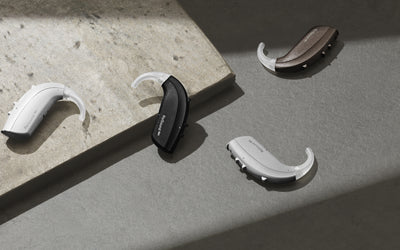
RIC hearing aids have a small unit that sits behind the ear, with a thin wire leading to a tiny receiver that sits in the ear canal. They are discreet, comfortable, and acoustically excellent, delivering a more natural sound because the speaker is positioned close to the eardrum. RIC aids are suitable for mild to severe hearing loss and are the most popular choice overall. Browse our RIC hearing aids.
BTE hearing aids have a slightly larger unit behind the ear, connected by a tube to a custom earmould that fits in the outer ear. They are extremely durable, easy to handle, and suitable for a wider range of hearing loss, including severe and profound loss. They are often the preferred choice for those who find smaller devices harder to manage. Browse our BTE hearing aids.
For a full breakdown of the differences, read our guide on RIC vs BTE hearing aids.
Discretion
Modern hearing aids are a world away from the bulky, conspicuous devices of the past. Today's RIC aids in particular sit almost invisibly behind the ear, many are barely noticeable even in close conversation. If keeping your hearing aids as discreet as possible matters to you, it is absolutely achievable with current technology.
Colour
All three brands we stock offer a range of colour options, from silver and charcoal to skin tones designed to blend with your complexion. This is a smaller consideration than the others, but it's yours to make.
Which Brand Should I Choose?
Phonak, Signia, and ReSound are three of the world's most respected hearing aid manufacturers. All three produce exceptional devices. Here's a broad overview to help you think about fit:
Phonak is widely regarded as the leader in speech intelligibility and performance in noisy environments. The Infinio range, including the flagship Phonak Audéo Infinio Sphere i90, represents Phonak's most advanced technology yet, with AI-powered noise cancellation and exceptional clarity in difficult listening environments. Phonak's Roger wireless microphone system remains the gold standard for challenging acoustic situations. Browse Phonak hearing aids.
Signia is known for its innovative technology and natural sound quality. The IX range features Integrated Xperience technology, which processes both the wearer's voice and external sounds simultaneously — a genuine advancement for people who struggle to hear their own voice clearly. Browse Signia hearing aids.
ReSound produces hearing aids that are frequently praised for their natural, open sound quality and exceptional Bluetooth connectivity, particularly with Apple devices. The Vivia range is their latest and most capable yet, building on ReSound's reputation for transparent, lifelike sound. The ReSound app remains among the most intuitive on the market. Browse ReSound hearing aids.
All three brands are available with full audiologist fitting and aftercare at Wholesale Hearing.
A Quick Decision Guide
Not sure where to start? Use this as a rough filter:
If you spend a lot of time in noisy social environments → Prioritise speech-in-noise performance. Look at premium-tier RIC devices from Phonak or Signia.
If phone calls and TV are your main challenge → Bluetooth connectivity and streaming accessories are your priority. All three brands handle this well.
If ease of use matters most → Rechargeable hearing aids with simple controls and a companion app. ReSound Vivia or Signia Charge & Go are popular here.
If dexterity is a concern → BTE hearing aids with larger controls, or rechargeable models that eliminate battery handling entirely.
If discretion is your main concern → RIC models from any of our three brands. Modern RIC devices are genuinely tiny.
If budget is the primary driver → Our audiologists will recommend the best device within your range that covers your hearing loss and key listening needs. Don't buy the cheapest option without expert input — an ill-fitting device is never a saving.
Frequently Asked Questions
How do I know which hearing aid is right for my hearing loss?
The starting point is always a current audiogram from a hearing test. At Wholesale Hearing, our audiologists review every customer's audiogram before processing an order, to ensure the chosen device is appropriate. If you're unsure where to begin, contact our team and we'll guide you through the process.
What's the difference between a £500 hearing aid and a £2,000 one?
The difference lies in processing sophistication, how many channels the device uses to process sound, how well it performs in noisy or complex environments, and how many additional features (Bluetooth, directional microphones, tinnitus management) it includes. A higher-tier device makes the most meaningful difference to people with active social or professional lives. For quieter lifestyles, mid-tier devices often offer excellent value.
Do I need one hearing aid or two?
In most cases, if you have hearing loss in both ears (which is the most common pattern), wearing two hearing aids, binaural fitting, produces significantly better results. Two hearing aids improve your ability to locate sounds, reduce listening fatigue, and deliver far more natural sound quality than one alone.
Can I try a hearing aid before committing?
At Wholesale Hearing, we offer a trial and returns process. Our audiologists can advise on what to expect during the adjustment period. Most people require two to four weeks to fully adapt to wearing hearing aids, this is normal and expected, not a sign that the device isn't working.
What aftercare is included?
All our hearing aids come with remote programming and aftercare support from our audiologist team. Adjustments to your hearing aid settings can be made remotely, without the need to visit a clinic. Learn more about how it works.
Is it worth buying hearing aids online?
It depends entirely on the provider. Cheap, uncalibrated amplifiers bought online without audiologist support are not hearing aids in the clinical sense. At Wholesale Hearing, every device we supply is clinically calibrated to your audiogram by a qualified audiologist, with aftercare support included, at wholesale prices. The result is the same clinical standard as a high-street hearing centre, at a significantly lower cost.
Ready to Find the Right Hearing Aid?
If you'd like personalised advice before making a decision, our audiologist team is available to help, free of charge, with no obligation.
Ask an Audiologist | Browse All Hearing Aids | See Our Prices
Shop All Hearing Aids
Shop now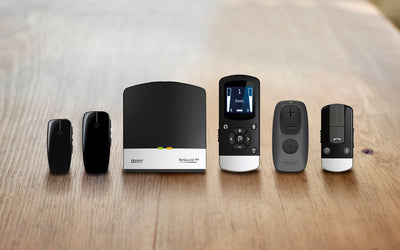
Shop Accessories
Shop now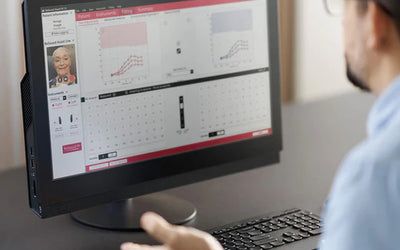
Speak To Our Audiologists
Contact Us