

By
Ross Higgins
Hearing aids are a genuine investment, so it's only natural to want to know exactly what you're getting for your money. Here's what actually determines how long yours will last.
If you're weighing up hearing aids, or wondering whether your current pair still has some life left in them, how long do hearing aids last is probably one of the first questions on your mind. It's a fair one. A good pair isn't a cheap purchase, and you want to know you're not going to be back in the market again next year.
The honest answer is that it depends on a few things, your device, how you look after it, and how your hearing changes over time. Below, we'll break down what a realistic lifespan looks like, what speeds up or slows down wear and tear, and how to know when it's genuinely time for something new rather than just a service.
How Long Do Hearing Aids Last, On Average?
Most hearing aids last somewhere between three and seven years, with five years being the point many audiologists consider a sensible time to start reviewing your options. Some well-maintained devices comfortably outlast this, while others, particularly smaller, more exposed styles, may need replacing sooner.
It's a common misconception that hearing aids simply stop working one day. In reality, it's usually a gradual process: components wear down, technology moves on, and your own hearing needs shift, all of which chip away at how well your current devices serve you.
|
Hearing Aid Style |
Typical Lifespan |
Why |
|
Behind-the-ear (BTE) |
5–7 years |
Electronics sit outside the ear canal, away from moisture and wax |
|
Receiver-in-canal (RIC) |
4–6 years |
Similar to BTE, with the receiver slightly more exposed |
|
In-the-ear (ITE) |
3–5 years |
More exposure to earwax and moisture inside the canal |
|
In-the-canal / CIC |
3 years |
Smallest, deepest-fitting styles face the most daily wear |
What Affects How Long Your Hearing Aids Last?
Two people with identical hearing aids can get very different lifespans out of them. Here's what tends to make the biggest difference.
Battery type
Rechargeable lithium-ion batteries typically hold a strong charge for around four to five years before their capacity starts to noticeably decline, which is often what prompts an upgrade. Disposable batteries don't affect your device's own lifespan in the same way, though they'll need changing every one to two weeks depending on use.
Daily care and maintenance
Wiping your hearing aids down each evening, keeping them somewhere dry overnight, and having wax guards and domes replaced regularly all add real years to their working life. Skipping this is one of the quickest ways to shorten it.
Moisture, earwax and environment
Sweat, humidity, dust and earwax are the biggest everyday threats to a hearing aid's internal components. If you're particularly active, live somewhere humid, or naturally produce more earwax, your devices may face more wear than someone in a drier climate with a less demanding routine.
Changes in your hearing
Because hearing aids are adjustable, a change in your hearing doesn't automatically mean you need new devices. Most modern hearing aids, including everything we supply, can be remotely reprogrammed to reflect changes picked up at a routine check-up. It's usually only when your hearing loss moves beyond what your current technology can support that a new device becomes necessary.
Advancing technology
Hearing aid technology moves quickly, with meaningful advances roughly every two to three years. Even a device that's still working perfectly well can start to feel behind, particularly around connectivity, noise handling in busy environments, and battery life.
Worth knowing: A worrying trend with some hearing aid retailers is encouraging an upgrade every year or two, regardless of need. This is often an unnecessary expense. With proper care and routine reprogramming, there's no reason a good pair shouldn't comfortably see out its full three-to-seven-year lifespan.
Signs It Might Be Time to Replace Your Hearing Aids
Rather than working to a strict timeline, it's more useful to watch for these signs:
-
Sound quality has dropped – more static, feedback, or muffled sound than you remember
-
You're needing frequent repairs – if you're back at the audiologist every few months, replacement is often more cost-effective
-
You're turning the volume up more than you used to – a sign your hearing may have changed
-
Replacement parts are getting harder to source – manufacturers eventually stop supporting older models
-
Your lifestyle has changed – new hobbies, more time on calls, or a return to the office might mean you'd benefit from features your current devices don't have
If you're noticing any of these, it's worth having a hearing test with a local audiologist, or sending us your latest results so our team can advise on whether a repair, a reprogram, or a new device makes the most sense.
How to Get the Most Out of Your Hearing Aid Investment
A little routine care goes a long way toward maximising your hearing aids' lifespan:
-
Wipe your devices down with a soft, dry cloth every evening
-
Store them somewhere dry overnight, away from bathrooms and radiators
-
Remove them before showering, swimming, or using hair products
-
Book routine check-ups every six to twelve months so they can be professionally cleaned and reprogrammed
-
Replace wax guards, domes and tubing as recommended rather than waiting for a problem
All the hearing aids we sell can be remotely programmed, so as your hearing changes over their lifespan, we can help keep them performing at their best without needing to replace them unnecessarily.
Ready for your next pair, or just want a professional opinion?
Send us your latest hearing test results and our UK-based audiologists will help you find hearing aids built to last, or advise honestly if your current pair still has life left in them.
Frequently Asked Questions
How long do hearing aids last?
Most hearing aids last between three and seven years, with five years being a common point at which people start to think about replacement. This varies depending on the type of device, how well it's looked after, and how much your hearing changes over that time.
Can hearing aids last longer than 7 years?
Yes. With good daily care, regular professional servicing, and low moisture or earwax exposure, some hearing aids continue to perform well beyond seven years. That said, older devices may eventually fall behind on technology, even if they're still working.
How often should I get new hearing aids?
There's no fixed rule, but most people replace their hearing aids every three to seven years. Rather than replacing on a schedule, it's best to be guided by how well your current devices are performing and whether your hearing has changed since they were fitted.
Do hearing aid batteries wear out?
Yes. Rechargeable lithium-ion batteries typically hold a strong charge for around four to five years before capacity starts to decline, which can eventually mean replacing the device. Disposable batteries don't affect the hearing aid's own lifespan, but they do need replacing regularly, roughly every one to two weeks depending on use.
Should I repair or replace my hearing aids?
If your hearing aids only need occasional cleaning or a minor part replaced, such as a wax guard or dome, a repair is usually the better option. If you're needing frequent repairs, notice a real drop in sound quality, or your hearing has changed significantly, it's often more cost-effective in the long run to replace them.
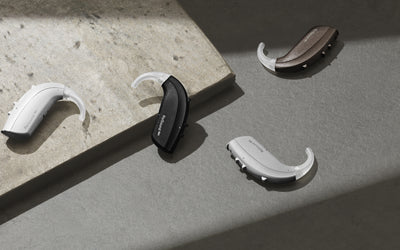
Shop All Hearing Aids
Shop now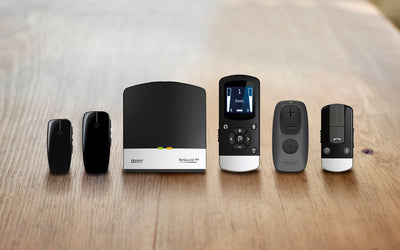
Shop Accessories
Shop now
Speak To Our Audiologists
Contact Us