

By
Karis Simms
Getting your first hearing aids is a big step, and it's completely normal to feel a mix of excitement and nerves about it. Your brain has likely spent months, or even years, quietly adapting to hearing less. Suddenly reintroducing sound takes a little time to adjust to and that's true whether you're buying on the high street or online.
At Wholesale Hearing, we support customers through this exact process every day, combining low prices with remote care from our UK-based audiologists. Here's a realistic, honest week-by-week guide to what your first month is likely to look like.
Before Your Hearing Aids Arrive: Getting Set Up
Before anything is programmed or dispatched, we need an accurate picture of your hearing. That means a hearing test or audiogram completed in person by a qualified hearing care professional, such as your GP, a local audiology clinic, or a high street hearing care provider. If you don't already have one from within the last six months, our team can help point you towards a local provider who can carry one out for you.
Once we have your audiogram, along with a short medical questionnaire we'll email you after you order, our UK-based audiologists review everything to make sure your chosen hearing aids are suitable, before programming them specifically to your prescription. We'll also work out the right receiver length and dome size for a comfortable fit, and include a small selection of different dome sizes in your pack so you can find what's most comfortable. You can read more about this process on our Fitting & Remote Programming page.
Week One: First Impressions
This is usually the most surprising week. Your hearing aids will arrive already programmed to your audiogram, along with a fitting report and clear instructions for use but that doesn't mean everything will sound "normal" straight away.
Common first-week experiences include:
-
Your own voice sounding different. This is one of the most common early adjustments and typically settles down as your brain gets used to hearing your voice amplified again.
-
Background sounds feeling louder than expected. Fridges humming, clocks ticking, footsteps on the floor, sounds you'd stopped noticing may suddenly feel very present. This usually softens as your brain re-learns to filter them out.
-
A feeling of fullness or awareness of something in your ear. This is a physical adjustment as much as an auditory one, and it tends to ease within the first week or two.
Wearing your hearing aids consistently during this period, even for short bursts to start with, genuinely helps speed up the adjustment. It's more effective than only wearing them occasionally.
Weeks Two and Three: Settling In
By now, many of the more jarring sounds should feel less overwhelming, and you'll likely notice conversations becoming easier to follow, particularly one-to-one in quieter settings. This is typically when it's worth paying attention to specific situations that still feel difficult, whether that's a particular room at home, a regular phone call, or background noise in the car.
If anything doesn't feel quite right, we don't expect you to simply put up with it. Our UK-based audiologists can fine-tune and reprogram your hearing aids remotely through the free hearing aid app on your smartphone, so adjustments can be made wherever you are, without needing to travel anywhere. You're also welcome to reach out to our team by phone, email, or via live chat, which is available 24/7, if you have any questions along the way. Full details of the support on offer are on our Aftercare page.
Week Four: Finding Your Rhythm
By the end of your first month, most people are wearing their hearing aids for the majority of the day and starting to notice the situations where they make the biggest difference, family conversations, watching TV, being out and about. Some sounds may still take longer to feel completely natural, and that's normal too, full adjustment can continue for a few months as your brain keeps recalibrating.
If you feel your settings could still be improved, you can request a free appointment with our audiologists for further remote fine-tuning at any time. Getting the best results from hearing aids has as much to do with this ongoing support and adjustment as it does with the technology itself.
Tips for a Smoother First Month
-
Wear them as much as you comfortably can, especially in the first week or two, rather than saving them for "important" situations only.
-
Start in familiar, quieter environments before testing yourself in busier ones like restaurants or family gatherings.
-
Keep a mental note (or a written one) of situations that still feel difficult, so you can raise them clearly during a fine-tuning session.
-
Give your ears a short break if needed, but try to build back up to full-day wear as quickly as feels comfortable.
-
Reach out early if something doesn't feel right. Remote fine-tuning means there's rarely a need to wait weeks for an adjustment.
How Wholesale Hearing Supports You Throughout
Every pair of hearing aids we supply comes with the full manufacturer's warranty from the date of purchase, and our team remains on hand well beyond that first month. Whether it's a question about how to use a feature, a request to fine-tune your settings, or general aftercare advice, our UK-based audiologists and customer service team are here to help for as long as you need us.
If you're still deciding on your first pair of hearing aids and aren't sure where to start, get in touch with our team. We're happy to talk through your options, and once you have a hearing test or audiogram completed in person, we can guide you through the rest of the process. See our How It Works page for a full step-by-step overview.
If you're weighing up your options more broadly, our guides on Private or NHS Hearing Aids: What Are My Options?and Your Guide to Wholesale Hearing cover the wider decision-making process before you order.
Frequently Asked Questions
How long does it take to fully adjust to hearing aids?
Many people notice a big improvement within the first month, but full adjustment as your brain recalibrates to new sound levels can take a few months. This is completely normal.
Do I need a hearing test before I can order?
Yes. We ask every customer to provide a hearing test or audiogram completed in person by a qualified hearing care professional, so our audiologists can program your hearing aids accurately to your prescription before they're dispatched.
What if I don't have a recent audiogram?
If you don't have one from within the last six months, our team can help point you towards a local provider who can carry one out for you in person.
Can my hearing aids be adjusted after I receive them?
Yes. Our UK-based audiologists offer free remote fine-tuning via the hearing aid app on your smartphone, so your settings can be refined based on your real-world experience.
What if my hearing aids don't fit comfortably?
Your pack includes a selection of different dome sizes, and our audiologists select your receiver length based on your fitting information. If you're still not comfortable, our support team can advise on next steps.
Is support available if I have a problem outside office hours?
Our live chat is available 24/7 for any questions or queries, alongside phone and email support from our customer service team.
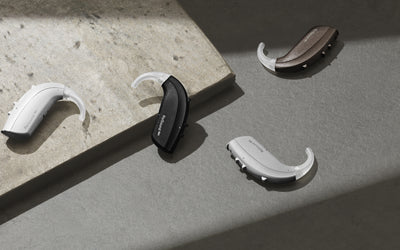
Shop All Hearing Aids
Shop now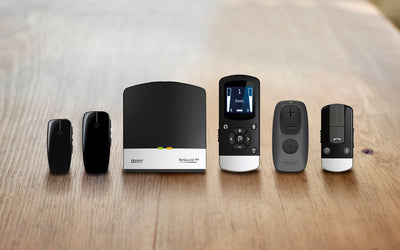
Shop Accessories
Shop now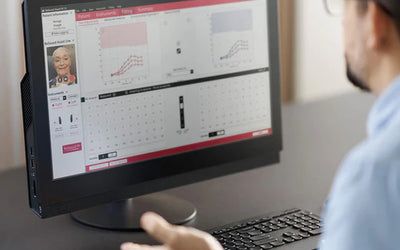
Speak To Our Audiologists
Contact Us