

By
Niamh Harnett
Hearing loss should never be a reason to slow down. Whether you're chasing a personal best on a Saturday morning run, working through a weights session, or spending your weekends on the water, today's hearing aids are built to move with you. Sweat resistance, secure fit, wind noise reduction and Bluetooth streaming are now standard on premium devices, not rare extras.
In this guide we look at what actually matters when you're choosing hearing aids for an active life: water and dust ratings, how devices behave in the gym and on the pool deck, what to do about wind noise on the bike or the trail, and which current models from Phonak, Signia and ReSound are worth shortlisting in 2026.
IP68
Highest ingress protection rating available in hearing aids today
60 min
Time the Phonak Audéo EON Sphere can withstand submersion in 1m of fresh water
38 hours
Think about your activity before you choose
Every active lifestyle puts a different kind of stress on a hearing aid. A swimmer's priority is moisture. A cyclist's priority is wind. A gym-goer needs a device that copes with sweat and stays put through burpees and box jumps. Before comparing specific models, it helps to think honestly about how you spend your active time:
-
Do you train indoors at the gym, or mostly outdoors on the road or trail?
-
Is water exposure a regular feature, whether that's rain, splashes, sweat or swimming?
-
Do you want to stream music, podcasts or calls while you train?
-
Is a secure, snag-free fit under a helmet, cap or swim cap important to you?
Once you know the answer, the right category of device becomes much clearer. Speak to one of our advisors if you'd like help matching your activity to a specific model.
Water resistance, sweat and what IP68 really means
Most modern hearing aids carry an IP rating, a two-digit code that tells you how well a device resists dust and moisture. The first digit covers dust protection on a scale of 0 to 6. The second covers water resistance on a scale of 0 to 8. An IP68 rating, now standard across premium ranges from Phonak, Signia and ReSound, means a device is fully sealed against dust and has been tested for extended submersion in water.
That makes IP68 devices well suited to sweat, rain and humid gym environments. Our waterproof hearing aids collection brings together the models built to handle exactly this kind of daily moisture exposure.
Worth knowing: an IP68 rating is not the same as a device being certified for swimming. IP68 confirms resistance to dust and water immersion under laboratory conditions, but manufacturer guidance still recommends removing standard hearing aids before you swim. Chlorine, pool chemicals and prolonged submersion sit outside what the rating covers.
Can you wear hearing aids while swimming?
This is one of the most common questions we hear from active clients, so it's worth answering plainly. Even the most water-resistant hearing aids on the market today, including the Phonak Audéo EON Sphere, are designed to survive accidental exposure, sweat and rain rather than deliberate swimming. Chlorinated and open water can affect the seals and components over time, so manufacturers advise taking your hearing aids out before you get in the pool or the sea.
The practical solution most active clients use is a simple routine: store your hearing aids in a dry, protective case poolside, and pop them back in once you're dry. If you rely on your hearing aids for safety cues around water, such as coaching instructions or a lifeguard's whistle, talk to your audiologist about the best approach for your situation, including custom swim plugs alongside your hearing aids.
Hearing aids for the gym and group fitness
Gyms bring their own combination of challenges: sweat, background music, echoey rooms and fast head movement. An IP68-rated device handles the moisture side comfortably. For sound quality, look for a hearing aid with strong automatic noise management, so instructions from a trainer or a spin class instructor still come through clearly over the music.
Bluetooth streaming is genuinely useful here too. Both the Signia Active Mini 7IX and current Phonak and ReSound ranges support direct streaming from a phone, so you can take calls or listen to a workout playlist without an extra pair of earbuds competing for space in your ear. Browse our Bluetooth hearing aids if streaming is a priority for you.
Running, cycling and wind noise outdoors
Wind is the outdoor athlete's biggest complaint. Air moving across a hearing aid's microphones creates a rushing or whistling sound that can drown out conversation, traffic or trail chatter. This has been one of the fastest-moving areas of hearing aid technology, and current premium devices use dedicated wind noise management alongside motion-aware processing that adjusts automatically as your environment changes, whether you're running through open ground or entering a sheltered woodland trail.
The Phonak Audéo EON Sphere is a strong option for outdoor training. It combines WindBlock 2.0 with AutoSense OS AI 8.0 to detect changing conditions in real time and adjust automatically, so you're not manually switching programmes mid-run.
Keeping hearing aids secure during exercise
A hearing aid that performs brilliantly but doesn't stay in place isn't much use on a run or in a HIIT class. A few practical steps make a real difference:
-
Ask your provider about retention locks or sports clips if you wear behind-the-ear or receiver-in-canal styles.
-
Choose a well-fitted dome or custom earmould, since a loose fit is more likely to shift during fast movement.
-
Take extra care removing helmets, caps, hoods and sunglasses, as these are common causes of accidental dislodging.
-
Consider an earbud-style, in-ear device such as the Signia Active Pro IX if you find behind-the-ear designs move around under headwear.
Our accessories range includes protective cases and cleaning tools to help keep your devices in good condition between sessions.
Comparing the best hearing aids for active lifestyles in 2026
All three of the devices below carry an IP68 rating and are strong options for an active lifestyle, but each suits a slightly different priority.
|
Model |
Best for |
Water & dust rating |
Connectivity |
Style |
|
Outdoor running, cycling and trail sports where wind and changing noise are the main challenge |
IP68, tested to 60 minutes in 1m of fresh water and 8 hours in a dust chamber |
Bluetooth streaming, Auracast, up to 38 hours battery life |
Receiver-in-canal (RIC) |
|
|
Gym-goers who want a small, ready-to-wear device that stays discreet and secure through high-intensity training |
IP68 water and dust resistance |
Bluetooth streaming, hands-free calling |
Ready-to-wear, in-the-canal (ITC) |
|
|
ReSound Sensia |
All-round active use, especially for wearers who struggle to follow speech in noisy environments thanks to its AI-driven noise reduction and four-microphone directionality |
IP68 water and dust resistance |
Bluetooth LE Audio streaming for Android and Apple, Auracast, hands-free calling |
Receiver-in-canal (RIC), including a rechargeable microRIE, also available in custom ITE/ITC and CIC styles |
Not sure which of these fits your routine? Our advisors can talk you through the differences, and you can explore the full rechargeable hearing aids range or RIC hearing aids if you'd like to compare more broadly.
Frequently asked questions
Can I wear hearing aids at the gym?
Yes. Most modern hearing aids, including IP68-rated models from Phonak, Signia and ReSound, are built to handle sweat, humidity and movement, making them well suited to gym sessions, weight training and group fitness classes.
Are any hearing aids fully waterproof for swimming?
No standard hearing aid is certified for swimming. IP68-rated devices resist sweat, rain and accidental splashes, but manufacturers recommend removing hearing aids before swimming and storing them in a dry case until you're out of the water.
What IP rating should I look for in a hearing aid for sport?
IP68 is the highest rating currently available and is the benchmark to look for if you're active. It confirms full dust protection and resistance to extended water immersion, which covers sweat, rain and humid conditions well.
Do hearing aids help with wind noise while running or cycling?
Yes. Premium hearing aids now include automatic wind noise management that reduces the whistling or rushing sound caused by air moving across the microphones, making outdoor training more comfortable.
How do I stop my hearing aids falling out during exercise?
A secure, well-fitted dome or custom earmould makes the biggest difference. Retention locks, sports clips and taking extra care when removing helmets or caps also help. Earbud-style devices such as the Signia Active Pro IX are designed to sit securely without additional clips.
Can I stream music or calls through my hearing aids while working out?
Yes, most current premium hearing aids support Bluetooth streaming directly from a smartphone, letting you take calls or listen to music without wearing separate earbuds.
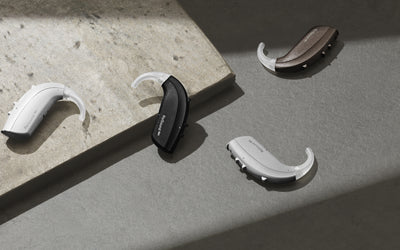
Shop All Hearing Aids
Shop now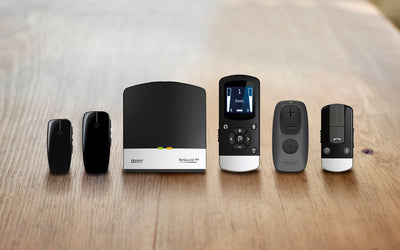
Shop Accessories
Shop now
Speak To Our Audiologists
Contact Us